
Rethinking Plastic Lumps: From Production Waste to Reusable Asset #
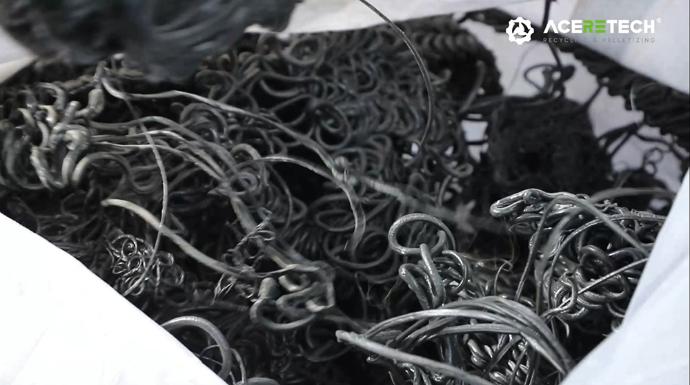
During plastic manufacturing processes such as extrusion, injection molding, and blow molding, large plastic lumps—often referred to as start-up lumps or head stock—are generated regularly. While these materials are frequently dismissed as waste, they actually represent high-purity plastic, identical in grade to the original raw material. The real challenge lies not in their value, but in the difficulty of processing them due to their excessive size and irregular shape.
Common, yet outdated, approaches to handling these materials include:
- Manual cutting (inefficient and risky)
- Selling as undervalued scrap
- Stockpiling or discarding (wasting space and increasing costs)
The core issue is that these lumps are simply too large to enter standard recycling workflows.
The True Bottleneck: Size Reduction, Not Pelletizing #
Many manufacturers mistakenly focus on the granulation stage, but the primary obstacle is actually reducing the size of these large, dense, and irregular lumps. Traditional crushers are not designed to handle such materials, often resulting in jamming, equipment damage, or operational shutdowns.
Why Single-Shaft Shredders Outperform Crushers for Headstock Material #
| Comparison Item | Single-Shaft Shredder | Traditional Crusher |
|---|---|---|
| Processing of Large Chunks | ✔ Direct Processing | ✖ Unable to Feed |
| Operation Mode | Low-Speed, High-Torque Shredding | High-Speed Shearing |
| Adaptability to Hard Materials | ✔ High | ✖ Prone to Jamming |
| Safety | ✔ Automatic Protection | ✖ Higher Risk |
| Output Control | ✔ Controllable Size | ✖ Unstable |
Key takeaway: For effective headstock material recovery, shredding must precede any crushing or granulation.
MS Single-Shaft Shredder: Purpose-Built for Challenging Plastic Lumps #
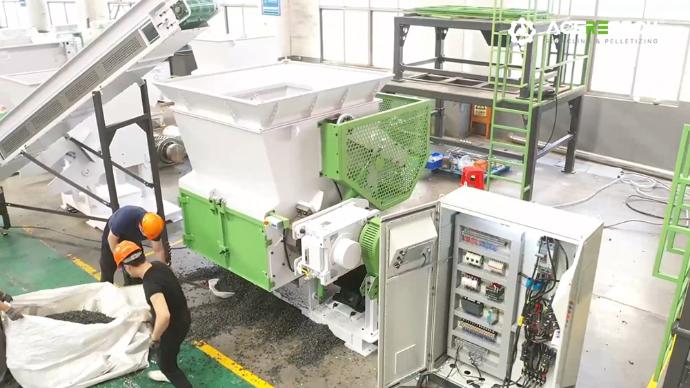
The MS series is engineered as a robust pre-treatment system, not just a simple pulverizer. It addresses the unique challenges of processing headstock materials through several core features:
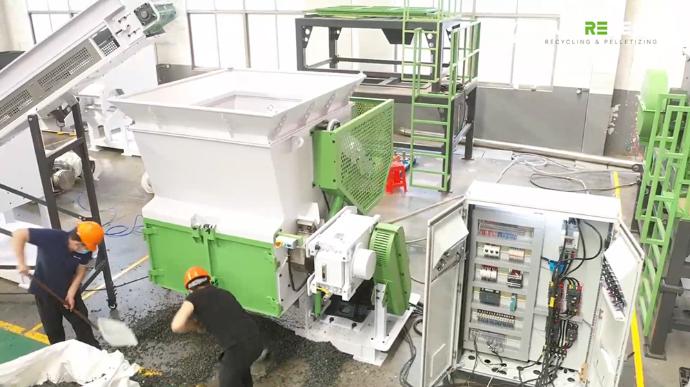
1. High-Torque Drive: Tackling Hard and Large Materials #
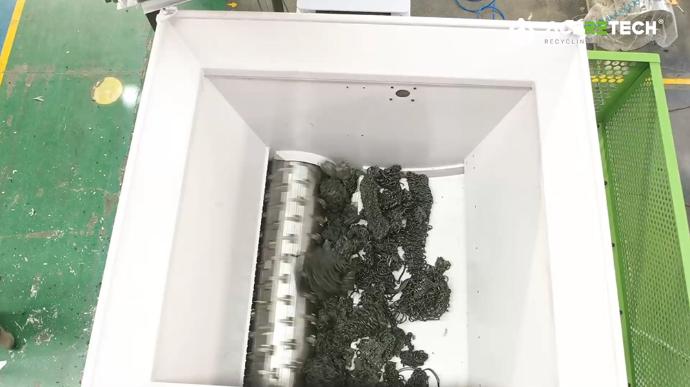
- Utilizes a low-speed, high-torque mechanism
- Directly shreds HDPE, PP, and PVC headstock without pre-cutting
- Minimizes equipment impact and damage
- Enables whole-piece input and stable output
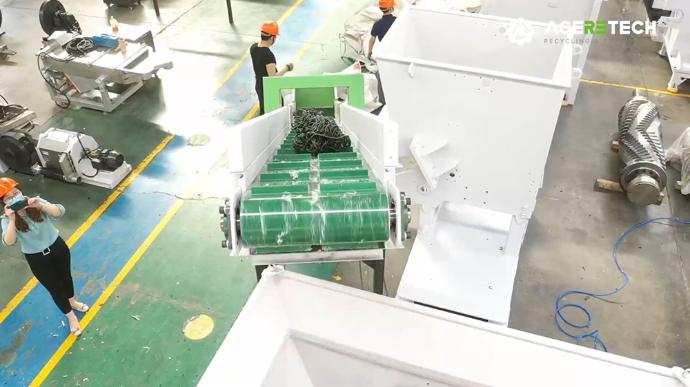
2. V-Type Feeding System: Ensuring Consistent Material Engagement #
- Hydraulic-driven feeding with a V-shaped hopper
- Prevents material slippage and idle running
- Maintains continuous contact with the rotor for stable shredding
3. Screen Control: Output Sizing for Downstream Processes #
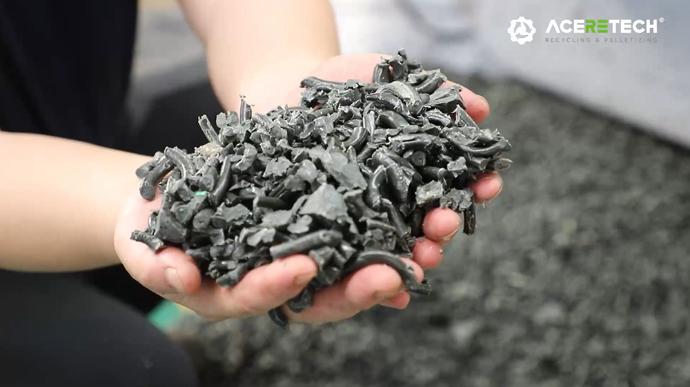
- Shredding aims for a size suitable for subsequent equipment (crusher or pelletizer)
- Supports screen replacement for adjustable output size (typically 40–100mm)
- Delivers uniform, stable output and prevents secondary blockages
4. Intelligent Protection: Minimizing Downtime and Damage #
- PLC control system with automatic forward/reverse rotation
- Overload and foreign object protection
- Enables unattended operation and stable performance
Optimized Workflow: The Right Approach to Head Scrap Recycling #
A sustainable and efficient recycling process for purge blocks involves a logical sequence:
- Purge Blocks
- MS Shredding
- (Optional) Crushing
- Pelletizing
- Production Reuse
The most critical step is the initial shredding and volume reduction, which sets the stage for efficient downstream processing.
Frequently Asked Questions #
Can die-head scrap be processed directly using a crusher? #
It is not recommended. Due to their large size, high hardness, and irregular shape, head scrap often exceeds the feed and load limits of traditional crushers, leading to jamming, cutter damage, or overload. The correct workflow is to first reduce size with a single-shaft shredder, then proceed to crushing or granulation.
What are the advantages of using a single-shaft shredder for head scrap? #
- Low-speed, high-torque operation for direct processing of large blocks
- Forced-feeding system to prevent slippage
- Controllable output size for downstream compatibility
- Automatic protection to minimize downtime
The core value is transforming otherwise unprocessable head scrap into a reusable resource.
Can head scrap go directly to granulation after shredding? #
This depends on the particle size after shredding and production requirements. If the size is small enough (e.g., ≤ 50mm), direct granulation is possible. For larger sizes, a secondary crusher is recommended. Consistent, uniform material size is key to maintaining granulation quality and throughput.
How do I select the right single-shaft shredder model for head scrap? #
Consider:
- Maximum block size
- Material type (HDPE, PP, PVC)
- Throughput requirements (kg/h)
- Downstream processing needs
Larger, harder scrap requires higher torque and robust feeding. Equipment should be configured to match actual operating conditions for stable performance.
Is head scrap recycling truly profitable? #
Yes, and often more than expected. Head scrap is high-purity raw material. Recycling reduces raw material costs, lowers disposal fees, improves material utilization, and stabilizes production costs. For medium-to-large manufacturers, a recycling system can deliver a rapid return on investment.