
Introduction to EPS Foam and Its Environmental Challenge #
EPS (expandable polystyrene) foam, commonly referred to as foam plastic, is recognized for its lightweight nature and outstanding properties such as heat insulation, sound insulation, and shock absorption. These characteristics make it a popular choice in packaging, construction, and decorative applications. However, due to its large volume, low density, and resistance to natural degradation, EPS foam waste presents a significant environmental challenge that requires effective solutions.
The Value of EPS Foam Pelletizing #
EPS foam pelletizing is a resourceful approach to recycling, involving the transformation of EPS foam waste into reusable plastic pellets. This process encompasses several stages—crushing, melting, extrusion, and pelletizing—resulting in recycled plastic particles. These pellets can substitute a portion of virgin plastic in the manufacturing of various products, including photo frames, decorative moldings, and skirting boards. By adopting this method, industries can promote resource conservation and mitigate environmental pollution.
Key Equipment and Process Flow for EPS Foam Pelletizing #
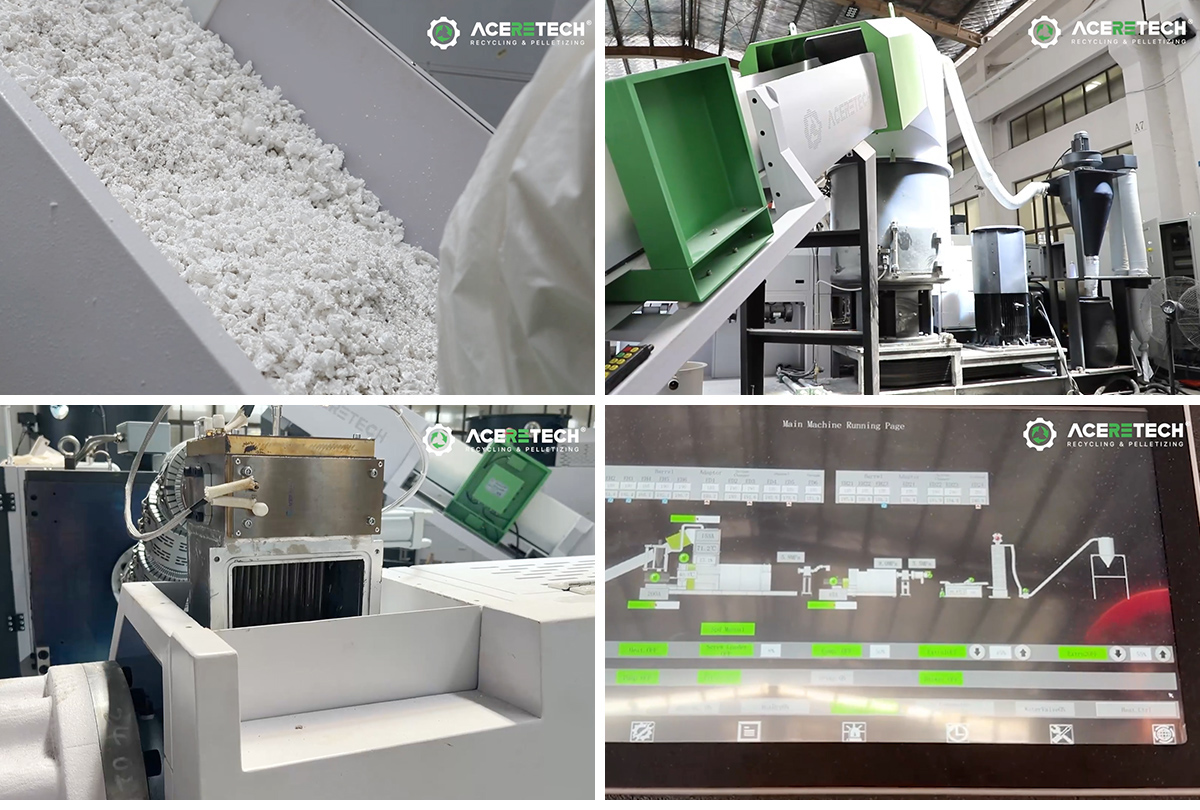
To address diverse customer requirements, ACERETECH offers customized EPS foam pelletizing production lines. The main components and their roles in the process are as follows:
- Belt Conveyor with Metal Detection: Ensures even feeding of EPS foam into the production line while detecting and removing any metal contaminants to safeguard downstream equipment.
- Dust Removal Device: Eliminates dust and surface impurities from the EPS foam, contributing to the quality of the final product.
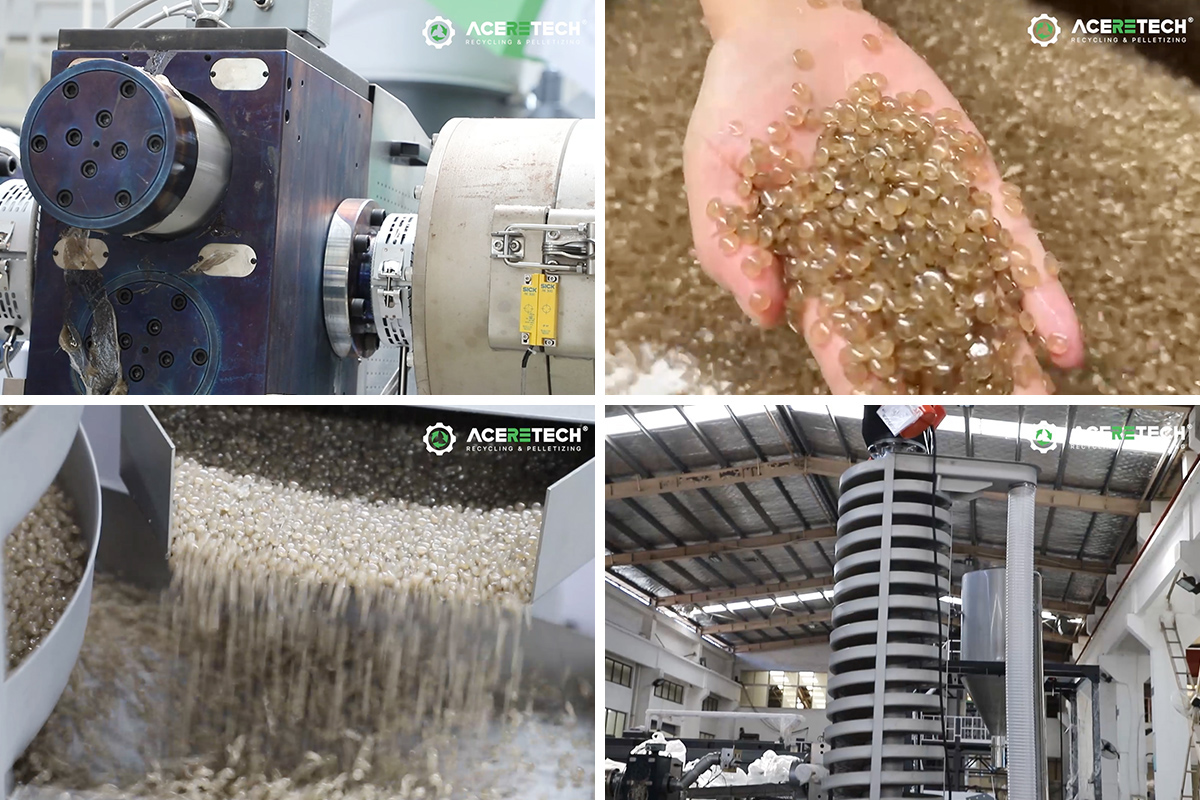
- Two-Stage Single Screw Extruder: Utilizes a dual extrusion process to achieve a more uniform plastic melt, resulting in stable and consistent pellet quality.
- Two-Stop Piston Filter (None-Stop Piston Type Filter): Employs a two-pass filtration system to effectively remove impurities from the melt, ensuring the purity of the recycled pellets.
- Water Ring Pelletizer: Implements a water ring pelletizing technique to produce pellets that are uniform in shape and have a smooth surface.
- Intelligent Touch Screen Control: Features an automated control system with a user-friendly touch screen interface, enabling easy operation and one-button start/stop functionality.
- Dehydration Vibration Screen: Removes residual moisture from the surface of the pellets.
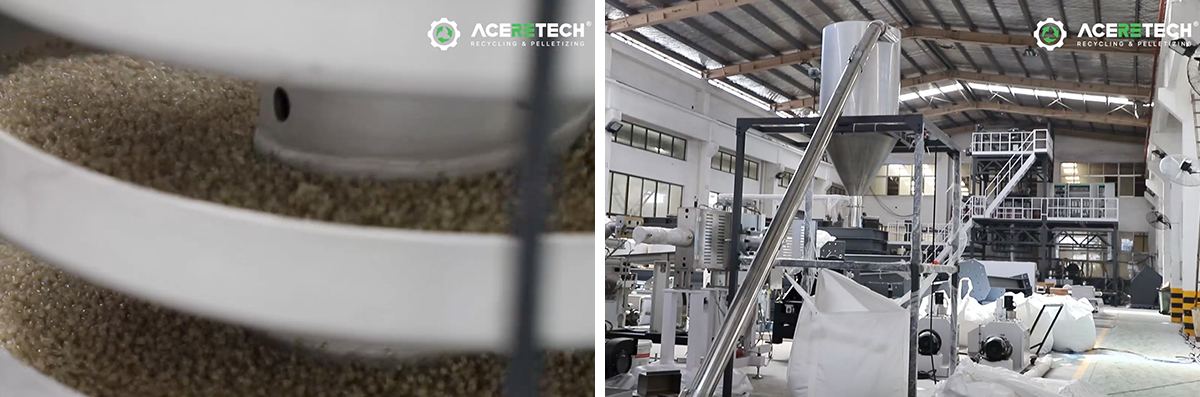
- Lifting and Drying Equipment: Further dries the pellets to ensure they meet moisture content requirements.
- Silo: Stores the finished pellets and facilitates automatic weighing and packaging.
Efficient Recycling for a Circular Economy #
EPS foam pelletizing stands out as an effective solution for addressing EPS foam pollution and advancing resource recycling. The production line described above is capable of efficiently converting EPS foam waste into high-quality recycled plastic pellets. These pellets can then be utilized in the production of a wide range of plastic products, supporting the principles of the circular economy by turning waste into valuable resources.
For further insights, explore EPS foam shredding case studies.
Related Tags: EPS Recycling Machine, Foam Recycling Machine, Plastic Pelletizing Machine